
If your muscles aren't growing despite exercising… a sign to eat ‘this’ instead of protein
2024.07.23 00:06
So, it wasn't necessarily just protein to build muscle...
Carbohydrates are just as important, and
Also, it's not good to overload your muscles...
For those who are worried because their muscles aren't growing
I think it would be good to check these aspects as well.
---------------------------------------
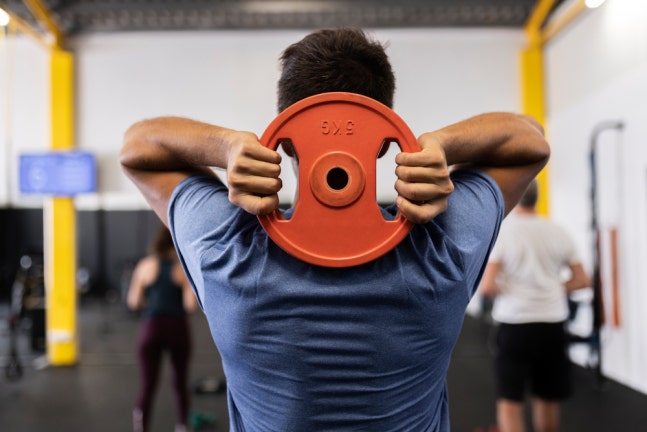
To increase muscle mass, you must consistently perform strength training. However, if muscle growth is slow despite exercising, you need to check carbohydrates, the amount of rest, and progressive overload.
It is known that protein is the most important nutrient for muscle growth. This is because protein is necessary to resynthesize muscle protein broken down during exercise. However, carbohydrates are just as important as protein. During high-intensity resistance training, our bodies utilize an energy source called glycogen. Glycogen is glucose stored in the liver and muscles and is composed of carbohydrates and water. If glycogen becomes insufficient due to restricted carbohydrate intake, athletic performance declines. Of course, eating less carbohydrates in one meal will not reduce the weight you can handle, but restricting carbohydrates in your diet while simultaneously engaging in muscle training and weight loss can cause muscle growth to stagnate.
Insufficient rest can also slow down muscle growth. Muscles grow as micro-damage to muscle fibers heals. Rest is crucial for this recovery. Typically, it takes 24 to 48 hours for muscle fiber proteins to resynthesize. Stimulating the same muscle group during this period can not only stagnate muscle growth but also lead to muscle rupture. The risk of injury is particularly high for seniors aged 65 and older, whose muscles and tendons have aged. If you experience appropriate muscle soreness after a workout, it is advisable to work out a different muscle group the following day. If you feel no muscle soreness, it indicates that the workout intensity was insufficient, requiring progressive overload.
If muscle growth is slow, you need to check for 'progressive overload,' which involves gradually increasing exercise intensity. Our bodies possess homeostasis, a tendency to maintain their current state. The same applies to the skeletal muscular and nervous systems. Initially, muscles break down and resynthesize in response to strong stimuli, but once they adapt, they stop causing any changes. Ultimately, the way to transform these muscles again is through greater stimulation. The method a beginner should choose is increasing repetitions and weight. If you are doing muscle training but do not feel your muscles growing even after the 8 to 12-week basic fitness period has passed, you should examine whether you are sticking to the same weight and repetitions.
Muscle growth can also stagnate due to a lack of carbohydrates.
You need to rest for muscle growth
Check exercise intensity

Comments1


Most Engaging Posts in the Community
- 01CommentsThe cream mist looks nice and moisturizing. It seems like it has good moisturizing power.426626.11.05
- 02CommentsYou applied the blush with a puff. It feels like chewy dough.336626.11.05
- 03CommentsI think it will be practical because you can combine two different styles into one.375126.11.05


- 01CommentsI really like the color. I'm a bit awkward with blush, so I think it'll be fine even if the staying power is short.3732026.10.25
- 02CommentsThe vanilla color has a subtle cream tint, so I think it will be easy to coordinate with various outfits.3533026.10.28
- 03CommentsFor eyebrows, longevity is important, but I think it's also important whether they draw naturally.1902026.10.27


- 01CommentsI always wonder what to wear every morning... haha. It's great that you organized this for me. I'll have to save this and refer to it. lol8,3854126.10.07
- 02CommentsA Chiikawa and The Saem collaboration? Even the packaging is so cute. I'm curious about the cosmetics, but I'm more tempted by the merchandise.4,5926426.10.19
- 03CommentsAs expected, Dior Holiday catches the eye right from the packaging. With the silver glitter pouch and added ribbon, it really feels like a perfect year-end gift.1,7822026.10.15


- 05
- 06
- 07
I did my first cleanse with cleansing milk again today.[7]
395626.11.05 - 08
Apply eyelash serum and skip mascara[8]
354426.11.05 - 09
I put cleansing powder in the cleanser and wash my face.[7]
295626.11.05 - 10


- 04
When your skin breaks out, just use these 3!! (I saw real results)[12]
1693026.10.28 - 05
- 06
- 07
I use Pawpaw cream instead of Vaseline.[13]
1426626.10.27 - 08
The Lab by Blanc Doux foam cleanser I bought at Daiso![22]
1427626.10.25 - 09
- 10


- 04
- 05
- 06
Tekira Glaze Jelly Beam Highlighter ✨ My Honest Review & How to Apply[13]
1,1615126.10.12 - 07
- 08
MAC Thanks It's MAC vs. Hug Me Swatch Comparison (Cool-toned swatches ⭕)[5]
1,0471126.10.13 - 09
- 10


