
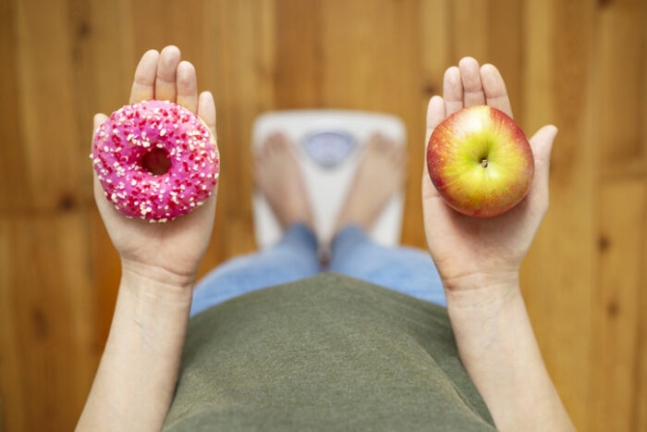
[Healthy Mukbang] If you're gaining weight even though you've reduced your food intake?... Is it because of ‘this’?
2024.07.22 19:10
It seems like delicious food always turns out to be poison... Oh dear...
Still, wouldn't it be okay once in a while? Hahaha... ㅠ_ㅠ
Excessive intake is the problem, of course... haha
Is the problem excessive consumption and not eating a balanced diet...?
If you take good care of your diet, keeping nutrients and calories in mind...
I'll let it slide this time... hahaha
------------------------------------------------------
Looking at the term "empty calorie" alone, one might assume it refers to food that contains no calories. However, the term actually describes foods that are high in calories but lack nutritional value. Foods composed primarily of sugars or fats that provide little satiety fall into the category of empty calorie foods. Examples include snacks, donuts, cakes, carbonated drinks, and alcohol.
High-calorie, high-fat foods such as donuts and cakes are empty-calorie foods... Excessive consumption increases the risk of cardiovascular disease.
Snacks such as donuts and cakes, which are frequently consumed, contain almost no protein or vitamins. On the other hand, they are excessively high in calories and rich in saturated and trans fats. Excessive consumption of these fats increases the risk of cardiovascular diseases, including obesity, arteriosclerosis, and myocardial infarction.
Once trans fats enter the body, they are not easily eliminated, making even small amounts fatal to health. According to the World Health Organization, trans fats should account for less than 1% of total energy intake. For an adult consuming 2,000 kcal per day, this means they should consume less than approximately 2.2g of trans fat.
Be careful with carbonated drinks, which are high in sugar and provide little satiety due to their liquid nature... Alcohol is also a prime example of an empty calorie food.
The same applies to carbonated beverages. Although they are high in calories, they provide little satiety because they are liquids. Eating other foods simply because they don't fill you up will ultimately harm your health. You must also be aware that they are woefully lacking in vitamins and minerals compared to their sugar content. Composed of sugar and high-fructose corn syrup, they cause a rapid spike in blood sugar levels. At this point, the body secretes insulin to lower the blood sugar. Frequent consumption of these beverages increases the risk of diabetes due to the overproduction of insulin beyond what is needed. Additionally, excess glucose is converted into fat in the body, contributing to obesity.
Alcohol is another food that cannot be left out of the category of "empty calories." With 7 kcal per gram, alcohol is higher in calories than carbohydrates or protein, yet it contains absolutely no nutritional value. On the contrary, alcohol accumulates fat and raises cortisol levels, leading to belly fat gain. It also interferes with the synthesis of proteins necessary for muscle synthesis and maintenance. Even sugar-free alcohol hinders dieting in itself. When alcohol enters the body, it increases triglyceride levels during the breakdown process. It even paralyzes brain nerves, inducing hunger even when one is not hungry. If high-calorie snacks are consumed alongside it at this time, it is essentially walking a shortcut to obesity.
Review your eating habits and ensure you get a variety of nutrients... Develop a habit of eating vegetables and nuts as snacks.
If you have been dieting for a long time but have not been able to reach your target weight, you need to review your eating habits. You must ensure you get the three major nutrients essential for your body (carbohydrates, protein, and fat) while also preventing deficiencies in vitamins, minerals, and dietary fiber. It is advisable to identify your patterns by keeping a record of what foods you usually eat and how much of empty calorie foods you consume under different circumstances.
If you frequently snack on empty calories, finding alternative foods can also help with your diet. This involves establishing a habit of eating vegetables rich in various nutrients, water, and dietary fiber, or nuts containing unsaturated fatty acids and antioxidants. In fact, there are studies showing that eating nuts just two or three times a week reduces the risk of weight gain or developing diabetes.
⟨3-Line Summary⟩
✔ Nutritionally deficient and high-calorie 'empty calorie' foods are high in sugar and fat and provide little satiety.
✔ Donuts, cakes, and similar foods are high in calories and saturated and trans fats, increasing the risk of obesity and cardiovascular disease.
✔ Ensure you get the three major nutrients while also consuming vitamins, minerals, and dietary fiber, and utilize vegetables and nuts.
['Healthy' Food Information Room, 'Healthy Mukbang' is a corner that addresses questions about common foods. A reporter with a background in food and nutrition explains nutritional information that is often overlooked in daily life in an easy-to-understand way.]

Comments1


Most Engaging Posts in the Community
- 01CommentsThe cream mist looks nice and moisturizing. It seems like it has good moisturizing power.436626.11.05
- 02CommentsYou applied the blush with a puff. It feels like chewy dough.336626.11.05
- 03CommentsI think it will be practical because you can combine two different styles into one.405126.11.05


- 01CommentsI really like the color. I'm a bit awkward with blush, so I think it'll be fine even if the staying power is short.3742026.10.25
- 02CommentsThe vanilla color has a subtle cream tint, so I think it will be easy to coordinate with various outfits.3533026.10.28
- 03CommentsFor eyebrows, longevity is important, but I think it's also important whether they draw naturally.1922026.10.27


- 01CommentsI always wonder what to wear every morning... haha. It's great that you organized this for me. I'll have to save this and refer to it. lol8,3864126.10.07
- 02CommentsA Chiikawa and The Saem collaboration? Even the packaging is so cute. I'm curious about the cosmetics, but I'm more tempted by the merchandise.4,5926426.10.19
- 03CommentsAs expected, Dior Holiday catches the eye right from the packaging. With the silver glitter pouch and added ribbon, it really feels like a perfect year-end gift.1,7822026.10.15


- 05
- 06
- 07
I did my first cleanse with cleansing milk again today.[7]
395626.11.05 - 08
Apply eyelash serum and skip mascara[8]
354426.11.05 - 09
I put cleansing powder in the cleanser and wash my face.[7]
295626.11.05 - 10


- 04
When your skin breaks out, just use these 3!! (I saw real results)[12]
1693026.10.28 - 05
- 06
- 07
The Lab by Blanc Doux foam cleanser I bought at Daiso![22]
1427626.10.25 - 08
I use Pawpaw cream instead of Vaseline.[13]
1426626.10.27 - 09
- 10


- 04
- 05
- 06
Tekira Glaze Jelly Beam Highlighter ✨ My Honest Review & How to Apply[13]
1,1635126.10.12 - 07
- 08
MAC Thanks It's MAC vs. Hug Me Swatch Comparison (Cool-toned swatches ⭕)[5]
1,0471126.10.13 - 09
- 10


