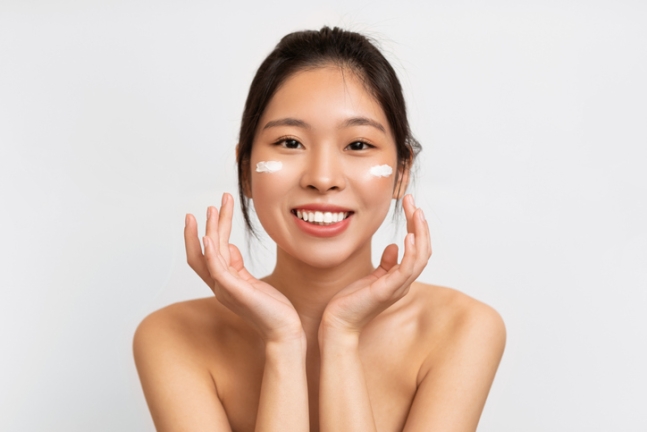
I didn't know until now... If you don't apply sunscreen 'here', your freckles will explode.
2024.08.07 08:48
this..
Today too... exactly the cheekbones, cheeks, chin, and forehead...
I only applied it to areas like this..
All I did was apply it to my neck...
Starting tomorrow, I will pay more attention to my jawline, sideburns, and even the area around my ears.
I guess I'll have to apply it evenly... even if I cover it with my hair...
If blown by the wind, exposed to ultraviolet rays...
I should pay more attention to applying it to my arms, too.
------------------------------------------
Everyone makes sure to apply sunscreen in the summer to prevent hyperpigmentation such as freckles. While most people only apply it to the center of their face, it is important to apply it thoroughly to the edges as well.
The jawline, sideburns, and areas around the ears have relatively less sebum secretion than the center of the face, making them vulnerable to external stimuli such as ultraviolet rays. Sebum is a fatty substance secreted by sebaceous glands distributed throughout the skin. It plays various roles, including moisturization, UV protection, and skin immunity. Consequently, oily skin, which secretes a large amount of sebum, tends to age more slowly than dry skin, which has less sebum. This is because the skin is less susceptible to damage thanks to the sebum.
Although sunscreen should be thoroughly applied to the jawline, sideburns, and around the ears, most people only apply it to the central part of the face, such as the cheekbones, cheeks, and forehead. The skin at the edges of the face, which is directly exposed to UV rays, risks damage, causing tiny blood vessels to expand in a spiderweb-like pattern. Of course, this also leads to pigmentation issues such as freckles and blemishes. It is especially important to apply sunscreen meticulously to the edges of the face, particularly for young children with delicate skin.
Meanwhile, if you are concerned about hyperpigmentation even after applying sunscreen, it is advisable to use whitening functional cosmetics. Whitening cosmetics help prevent the skin from tanning as much when exposed to ultraviolet rays. When skin is irritated by UV rays, melanin is produced, causing the skin to darken. While the functional ingredients in whitening cosmetics cannot break down melanin that has already been formed, they inhibit the creation of new melanin. Substances registered as whitening ingredients with the Ministry of Food and Drug Safety include four types of Vitamin C derivatives (Ascorbyl Glucoside, Ascorbyl Tetraisopalmitate, Ethyl Ascorbyl Ether, and Magnesium Ascorbyl Phosphate), Niacinamide, Arbutin, Alpha-Bisabolol, Paper Mulberry Extract, and Oil-soluble Licorice Extract.
You should apply sunscreen before and during your outing, and apply whitening cosmetics in the evening after returning home. If whitening cosmetics are directly exposed to sunlight, the activity of the functional ingredients decreases.
The jawline, sideburns, and areas around the ears have relatively less sebum secretion than the center of the face, making them vulnerable to external stimuli such as ultraviolet rays. Sebum is a fatty substance secreted by sebaceous glands distributed throughout the skin. It plays various roles, including moisturization, UV protection, and skin immunity. Consequently, oily skin, which secretes a large amount of sebum, tends to age more slowly than dry skin, which has less sebum. This is because the skin is less susceptible to damage thanks to the sebum.
Although sunscreen should be thoroughly applied to the jawline, sideburns, and around the ears, most people only apply it to the central part of the face, such as the cheekbones, cheeks, and forehead. The skin at the edges of the face, which is directly exposed to UV rays, risks damage, causing tiny blood vessels to expand in a spiderweb-like pattern. Of course, this also leads to pigmentation issues such as freckles and blemishes. It is especially important to apply sunscreen meticulously to the edges of the face, particularly for young children with delicate skin.
Meanwhile, if you are concerned about hyperpigmentation even after applying sunscreen, it is advisable to use whitening functional cosmetics. Whitening cosmetics help prevent the skin from tanning as much when exposed to ultraviolet rays. When skin is irritated by UV rays, melanin is produced, causing the skin to darken. While the functional ingredients in whitening cosmetics cannot break down melanin that has already been formed, they inhibit the creation of new melanin. Substances registered as whitening ingredients with the Ministry of Food and Drug Safety include four types of Vitamin C derivatives (Ascorbyl Glucoside, Ascorbyl Tetraisopalmitate, Ethyl Ascorbyl Ether, and Magnesium Ascorbyl Phosphate), Niacinamide, Arbutin, Alpha-Bisabolol, Paper Mulberry Extract, and Oil-soluble Licorice Extract.
You should apply sunscreen before and during your outing, and apply whitening cosmetics in the evening after returning home. If whitening cosmetics are directly exposed to sunlight, the activity of the functional ingredients decreases.

203K people are talking about intelligence right now

395K people are talking about sunscreen right now

795K people are talking about inattention right now
Comments1

